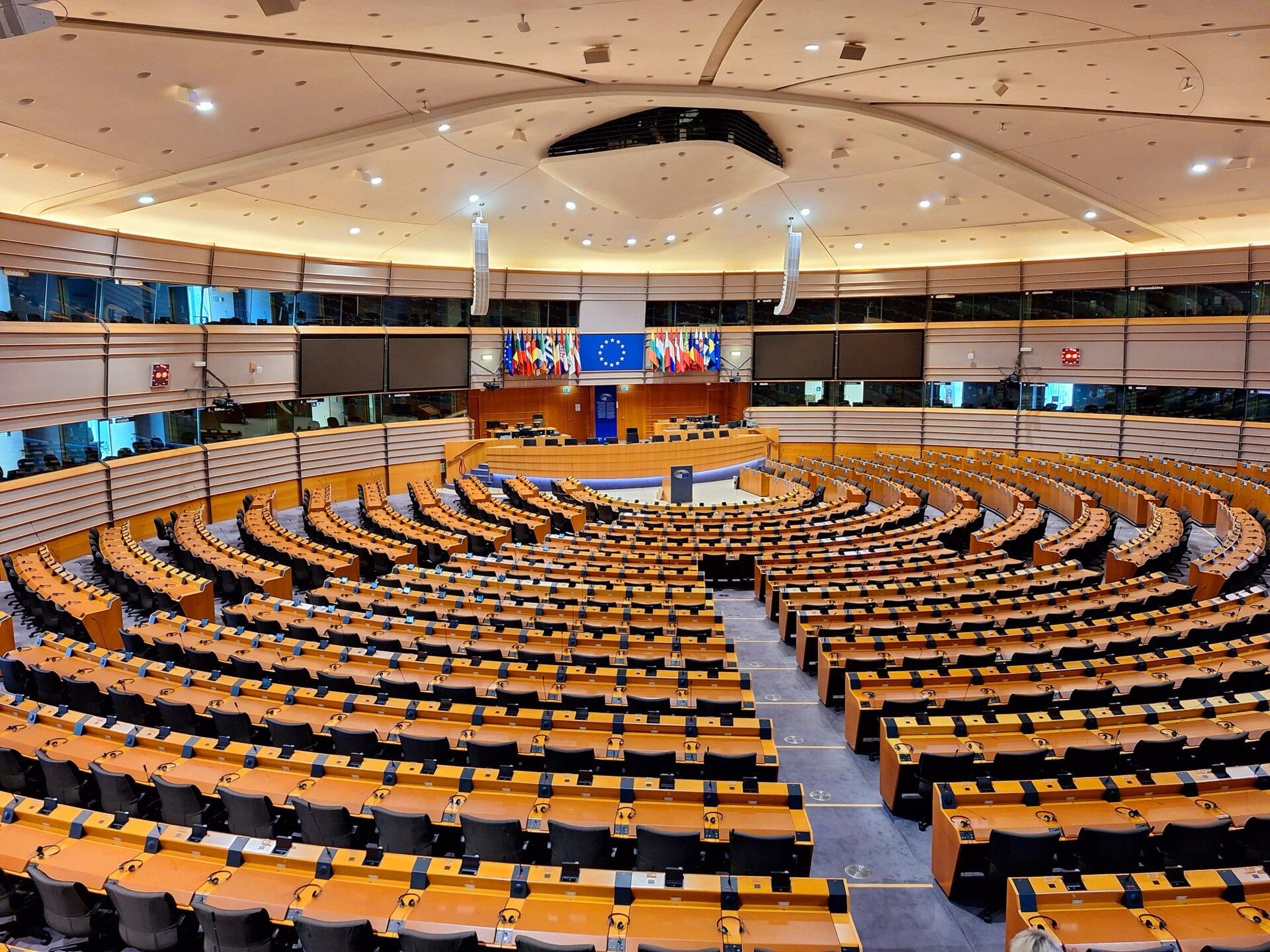
There is a persistent misunderstanding that the European Parliament is the most powerful parliament in Europe and will play somehow a role in EU foreign policy towards Iran. This is simply not the case.
Because of this misunderstanding, opposition groups keep flocking to the European Parliament and keep thinking that anything that happens there is important. ‘Did you see who they invited? It is a conspiracy!’. No it’s not a conspiracy and it is not important at all.
There is and will be no role for the European Parliament in determining the EU policy towards Iran. Members of European Parliament try very hard to give voice to their opinions with regard to EU foreign policy. However that does not change the institutional reality.
The reason why I can be so clear is that the European Parliament simply plays no role at all in that process. That is the institutional reality in the EU. The Austrian Ministry of Foreign Affairs was so kind to describe in English how this works according to EU Treaties. If you read their explanation at their website you will see that the words ‘European Parliament’ do not appear there at all. It is rather the opposite. You can read there that any EU decision on foreign policy is taken by unanimity. This means that all EU Member States have to agree with it.
Therefore the decision making is like this EU Member States à EU Council. The EU Council is the institution where the representatives of the governments of EU Member States come together to make EU wide decisions together. In a number of policy areas they need also agreement from the European Parliament (for agriculture for example) but not for foreign policy (as you can read at that website). So when it comes the EU Member States present their point of view in the EU Council and then they either make a decision together or they do not. If they do not it means that the EU Member States will do their own foreign policy with regard to a specific situation. For example now you see that France has a different policy than Spain when it comes to the war against the Iranian regime.
The fact that the European Parliament (EP) has no formal role whatsoever in the decision making does not stop the EP from shouting very loud and trying to look important. But when it comes to the actual big decisions the EP has no power whatsoever.
A clear example is the fact that the resolutions of the EP to put the IRGC on the terror list were always completely ignored. Only when Member States started to take decisions on this under pressure from their national Parliaments, things started to change.
What does that mean for Iran? It means that all Member States will try to understand what is happening inside Iran and also try to understand the political landscape of opposition groups that are represented outside Iran.
In light of the fact that they placed the IRGC on the EU terror list, there seems to be an understanding that the current regime will not last much longer. At this moment they are starting to seriously consider what comes next.
No EU Member State has at the moment a clear idea regarding the transition in Iran. No decision on anything or anyone has been made. Not everything is a conspiracy. These are simply civil servants and members of national parliaments who are trying to understand the matter at hand before making a decision. It’s not ‘making a conspiracy’. It’s called ‘thinkbefore you act’ and that is a good thing. They do not want to make the same mistakes as in Syria and they want to make sure that all major ethnic groups are on board. This decision making will take time and everyone can talk to people who are elected in national parliaments or with civil servants in Ministries of Foreign Affairs.
This means that you can ignore the noise around meetings in the European Parliament and instead focus on finding a way to make your case to the national parliaments and governments of EU Member States. No conference or meeting in the European Parliament will determine or even influence in how the EU will determine who they see as the legitimate new government of Iran.
Johannes de Jong
Director Sallux
Sallux is a European political foundation