1. Historical Overview
Ahwaz, historically known as Arabistan, was an independent Arab state ruled by Sheikh Khazal al-Kaabi until 1925, when it was forcibly occupied and annexed by the Iranian state through a tacit agreement with Britain.
Ahwaz’s roots run deep in ancient civilizations such as the Elamite, Assyrian, and Babylonian empires, followed by its inclusion in the Islamic Caliphate. The region remained under Arab governance until the end of Sheikh Khazal’s reign.
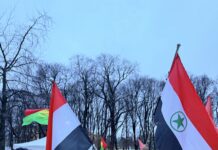
During its independence, Ahwaz had its own flag, currency, army, and diplomatic relations with neighboring states.
⸻
2. Geography and Strategic Location
Ahwaz is located in the southwest of what is today called Iran. It borders Iraq to the west and the Arabian Gulf to the south, stretching to the Strait of Hormuz (Bab al-Salam).
The region contains three of Iran’s most important rivers: Karun, Karkheh, and Jarrahi, and is among the most fertile agricultural areas in the country.
Ahwaz serves as Iran’s vital gateway to the Arabian Gulf, giving it significant economic and geopolitical importance.
⸻
3. Population and National Identity
The Arab population in Ahwaz is estimated between 10 to 12 million people, comprising approximately 14% to 18% of Iran’s total population, according to unofficial sources.
Ahwazi Arabs are both Sunni and Shia Muslims, along with a longstanding Mandaean (Sabian) minority.
Despite their deep-rooted heritage, Arabic is banned in formal education, and Persian is imposed on students from the first grade as part of a systematic campaign to erase Arab identity.
⸻
4. Persian Occupation and Systematic Violations
Since the Iranian occupation in 1925, the Ahwazi people have endured relentless oppression aimed at erasing their identity and displacing them. Violations include:
1. Confiscation of Arab lands and distribution to non-Arabs.
2. Renaming cities and landmarks with Persian names (e.g., Al-Muhammarah to Khorramshahr).
3. Prohibition of traditional Arab clothing and suppression of cultural expression.
4. Execution of political activists and intellectuals.
5. Socioeconomic marginalization despite Ahwaz being Iran’s primary source of oil wealth.
6. River diversion projects to Persian provinces, causing droughts and the destruction of agriculture.
7. Deliberate impoverishment and exclusion from employment, education, and public services.
⸻
5. Exploited Economic Resources
Despite its wealth, Ahwaz remains one of the poorest regions under Iranian control. Key resources include:
• Oil: Over 80% of Iran’s oil production originates in Ahwaz.
• Natural Gas: A significant source of Iranian energy.
• Agriculture: Ahwaz has some of the most fertile lands in the region.
• Water: Although rich in rivers, Iran has diverted much of Ahwaz’s water to central Persian provinces.
⸻
6. Ahwazi National Movements
Over the past century, numerous movements have emerged seeking Ahwazi liberation and self-determination. The most prominent is:
1. The Democratic Popular Front for Ahwaz (ADPF):
• Founded in 1990, it advocates for full independence.
• Operates media, human rights, and youth institutions.
• A founding member of:
• The Alliance of Non-Persian Nations in Iran
• The National Council of the Ahwazi Revolution Forces
• The Arab Union to Confront the Iranian Occupation, which includes forces from Iraq, Lebanon, Syria, Yemen, and Ahwaz.
2. The Front of Nations for Self-Determination in Iran:
• A coalition of oppressed nationalities: Azeris, Kurds, Baloch, Turkmen, and Ahwazis.
⸻
7. Ahwazi Resistance
The Ahwazi people utilize various forms of resistance, including:
• Peaceful protests, legal advocacy, journalism, and cultural expression.
• Armed resistance has occurred during certain periods in response to extreme oppression.
• Ahwazi diaspora communities in Europe and North America actively work to amplify the voice of the cause internationally.
⸻
8. Media Blackout and Censorship
• The Iranian regime enforces a strict media blackout over Ahwaz.
• Foreign journalists and international organizations are barred from entry.
• Internet access is routinely cut during protests or unrest.
⸻
9. International Advocacy and Support
• Ahwazi organizations have submitted formal complaints to the United Nations and the Human Rights Council.
• The cause has received support from various Arab and international human rights organizations.
• Some European parliaments have debated or acknowledged the ongoing oppression in Ahwaz.